Artenda — a paid open call catalogue, and how it differs from free databases
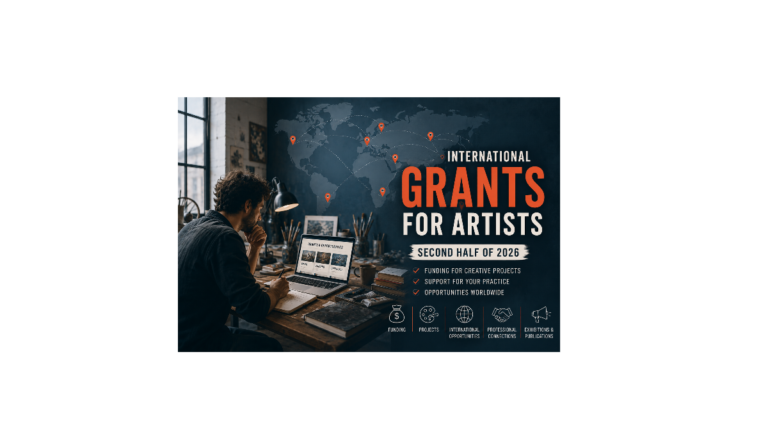
Catalogues of grants and competitions are often free, but scattered across many sites.
The Artenda platform for grants, fellowships and competitions works differently.
Artist Roland Burkart has been building it since 2019 — every programme sits in one catalogue with filters.
The first 30 days are free, and a paid subscription follows.
What is actually free here, and what is not
Full access to the catalogue opens with a 30-day trial period.
After that, the subscription renews automatically unless you cancel it.
The price is €3.49 a month.
You need to cancel at least three days before the next payment, or you will be charged again.
The old version of this article simply said “after registration”.
It did not make clear that registration turns into a paid subscription.
Six categories instead of one big pile
Opportunities are split into six types — competitions, project grants, fellowships, residencies, exhibition open calls and public art.
Each listing has a detailed card.
Art field, duration, accommodation conditions, application fee, required documents — all in one place.
It is also easier than reading through one long, unstructured list.
Agenda, recommendations and video courses
You can save selected opportunities to a personal “Agenda”.
You will get an email reminder before the deadline.
You also get personalised recommendations three times a month, based on your filters.
On top of that, the platform runs video courses — on portfolios, artist statements and preparing applications.
This is no longer just a catalogue, but a small educational programme alongside it.
Language and geography
The interface comes in German, English and French.
There is no Russian or Belarusian.
At the same time, most residencies and competitions in the catalogue are tied to residence or citizenship in a specific EU country.
It is worth checking this for every listing individually.
The card’s headline does not always show this restriction.
Who it is especially good for
Good fit if: you are willing to pay for speed and structure in your search.
You would rather not search manually across different sites.
Especially useful if you want a ready-made selection matched to your filters, rather than searching from scratch every time.
May not be a fit if: you expected free access after a simple registration — that is not the case here.
It also may not work for you if the lack of an EU citizenship requirement matters a lot.
You will need to filter those listings out yourself.