AOYF Human Rights Photography Prize – open call for photographers and artists with a €10,900 prize and an exhibition in Geneva
A photograph no longer proves itself: anyone can generate one, and a real one can be called a fake.
That is the theme of the new photography open call from the AOYF Human Rights Photography Prize in Switzerland.
For the first time in the prize’s history, you can apply from any country, with or without a degree.
Five finalists will show their projects at the Centre de la photographie Genève.
And the winner receives CHF 10,000 (about €10,900).
Who can enter
In fact, you do not need an art school degree here.
You can apply with any citizenship and from any country of residence, as long as you are 18 or over.
Students, self-taught artists and people who came to photography from another profession can all apply.
A collective can also apply.
In that case it names one contact person, and the foundation pays the prizes to that person.
But each artist or collective can submit one project only.
These people cannot take part: jury members, staff of the Act On Your Future Foundation (AOYF) and the centre, and their close family.
The 2027 theme: post-truth
Relevance to the theme is one of the jury’s criteria, so start there.
In 2027 the theme of the prize is “Post-Truth: Reality in Question”.
The organisers note that facts have never been so easy to check, or so easy to dismiss.
Algorithms decide what we see, and AI makes believable pictures.
At the same time, genuine evidence is sometimes called a fake.
However, the foundation does not treat doubt about the accepted version of events as disinformation.
So work about testimony, propaganda, disputed history or personal experience that others deny fits the theme.
These are only starting points, though, and your approach can be documentary, conceptual or experimental.
What work you can submit
The prize leaves technique open, but honesty about your method matters.
You can submit a series of 8 to 25 images or a video of up to 10 minutes.
If the work is longer, also state its full length.
The project can be new, or even unfinished, or already shown and published.
The prize also accepts generated, staged and archival images, including images made with AI.
For this material there is one condition: you must describe your method honestly in the project text.
If you present a generated image as a document, the foundation may disqualify your entry at any stage.
To verify an entry, the foundation may also ask for original files, metadata or prompts.
Prizes
If you reach the final five, you receive a cash prize, though the amounts differ.
The winner receives CHF 10,000: CHF 7,000 (about €7,660) to spend on anything and CHF 3,000 (about €3,280) for developing the project.
You can spend the CHF 3,000 within 24 months, in agreement with the foundation.
The other four finalists receive CHF 1,000 (about €1,090) each.
Each finalist also gets up to CHF 1,500 (about €1,640) to produce work for the exhibition.
The foundation pays this money against documented expenses.
If tax applies to a prize, the recipient pays it.
That said, the foundation may choose not to award a prize if the entries are weak.
The exhibition in Geneva
For finalists, the prize means half a year of work.
From February to June, each finalist prepares a project with the centre’s curators.
Each finalist produces the works in Geneva, with the centre’s team supervising.
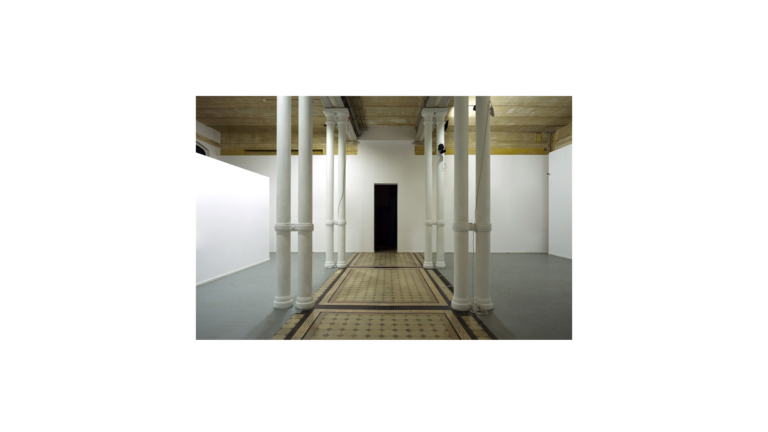
Then the Centre de la photographie Genève shows the projects from 16 June to 21 August 2027.
Finalists need to be in Geneva from 14 to 16 June, that is, for the final jury round, the ceremony and the opening.
The foundation covers reasonable travel and accommodation costs, by prior agreement and within its budget.
If you need a visa for Switzerland, you arrange it yourself, but the foundation may help with an invitation letter.
The foundation may also cover the visa fee.
How selection works
Selection runs in three rounds, and the first two take place online.
First, the foundation and the centre check that your entry meets the conditions.
Then the jury scores the entries from 11 to 24 January 2027.
By 7 February, in the second round, the jury chooses five finalists.
The foundation also promises to tell them in February.
The jury chooses the winner in Geneva on 14 June, after seeing the finished exhibition and talking to the artists.
It judges quality and originality, relevance to the theme, visual language, depth of concept and potential for the exhibition.
The foundation does not give feedback on unsuccessful entries.
Who is on the jury
The foundation draws the jury from photography, art, media and human rights.
It has already confirmed the centre’s director, Danaé Panchaud, and Søren Pagter.
Pagter heads photojournalism teaching at the Danish School of Media and Journalism.
Experts in media, the art market, journalism and digital investigations will also judge your work.
The foundation promises to announce the full jury later.
For comparison, the 2023 jury included the director of technology and human rights at Human Rights Watch and a specialist from Christie’s.
Rights and the foundation’s collection
Read the rights clause before you apply, because it also covers finished works.
You keep the copyright.
Finalists let the foundation and the centre show the work free of charge in the exhibition, the catalogue, the press and on social media.
Every use shows the author’s name.
However, each finalist gives two works made with the prize money to the foundation’s collection.
The finalist and the foundation choose them together, and the foundation may keep, exhibit, lend and sell them.
If someone buys a work from the exhibition, the artist and the foundation share the proceeds equally by default.
Who runs the prize
The prize is more than ten years old, and one foundation has run it all that time.
Act On Your Future is a non-profit foundation, founded in Geneva in 2014.
It promotes human rights among young people and has also run the photography prize since 2015.
So the 2027 edition is the seventh.
In earlier editions, students and recent graduates of major European art schools took part.
They include ECAL, HEAD – Genève, ENSP in Arles and the Royal College of Art.
The prize has also worked with the FIFDH human rights film festival in Geneva.
The partner for this edition is the Centre de la photographie Genève, a centre for photography and contemporary image-making.
What you need to apply
You need few documents, and all of them are about the project itself.
You apply online only, through the Picter platform, and entry is free of charge.
The terms are available in English and French.
For this photography open call, you need:
– A project title and a portfolio of 8 to 25 images or a video of up to 10 minutes.
– A project text of up to 300 words about your approach and how it relates to the theme.
– A biography of up to 150 words, with your contact details.
– Captions and technical details for the works.
If recognisable people appear in your images, you are responsible for getting their consent to be photographed and published.
Our guide “Artist statement, CV and portfolio” can help you write the project text.