We Work Remotely — how a designer or digital artist can find remote work abroad
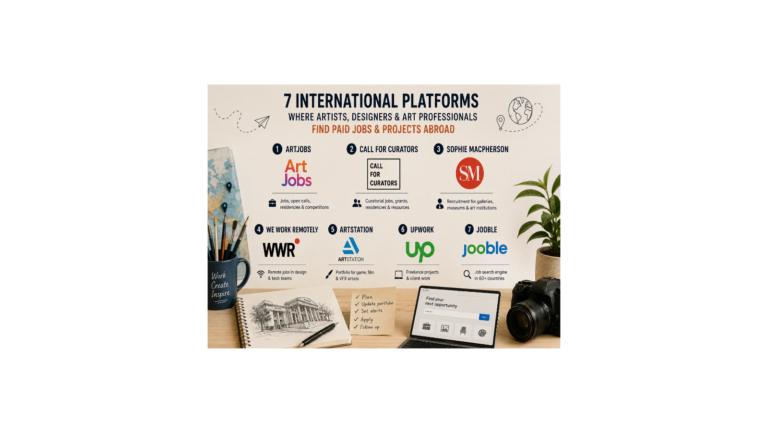
We Work Remotely is not a freelance marketplace but a job board: it is about permanent remote work at companies abroad, not one-off gigs. Let’s look at how a designer or artist can search it for free, what the service charges for, and who it really suits — and who will only get value from it as a free way to keep an eye on the market.
What this service is
We Work Remotely is one of the largest remote-job boards, with around 6 million visits a month. It is not a freelance marketplace: the service does not process payments and takes no cut of your salary — your application goes straight to the employer.
The board was created by the makers of Basecamp, has been around for over ten years, and remains a respected platform: posting jobs costs money, so real companies stand behind the listings.
There are only a few categories: programming, design, product, management, sales and marketing, support. The flow is mostly IT, so for an artist the niche here is product, UX/UI and web design rather than illustration or one-off art commissions; there are noticeably fewer design jobs than programming ones, and it is hard going for a complete beginner.
How it works
You can browse the catalogue for free and without registering: pick a category (Design, for example), open a job card and use the Apply button to go to the employer’s site, where you actually apply. Portfolios are not stored here: keep your work on your own site, Behance or Dribbble, and give the links in your CV. CV and cover letter are in English.
A free Basic account adds conveniences: upload a CV, save jobs and verify your profile through LinkedIn.
One important detail is the country tag on each job: “United States of America”, “Multiple EU nations” or “Anywhere in the World”. But the tag isn’t everything: look for the real conditions (country, time zone, right to work) in the body of the description, at the bottom. There is no bidding, haggling, reviews or deal protection inside — this functions as a listings board rather than a marketplace: the whole path from interview to payment runs directly with the employer.
What it costs
For a job-seeker the board is free: searching, browsing, applying and a basic account cost nothing.
Separately the service sells a Pro subscription (about $2.95 for the first month, then roughly $14.95 a month), but it has an unpleasant catch — effectively a 12-month commitment hidden in the terms; people complain about it in reviews (a Trustpilot rating of about 3.2 out of 5). You do not need it to access the jobs.
The service makes its money from employers who pay to post: roughly $299 for a 30-day listing to start, plus pricier visibility packages and one-off promotion. It takes nothing from your salary — it does not handle payouts at all.
Who the site is available to
You can view jobs and use the free part from anywhere — access to the board itself is not restricted in any way.
But to receive a salary you will need a foreign bank account (a European one, for example): the employer pays directly, usually through services that formally employ staff on their behalf, like Deel or Remote.com, and these do not work in every country.
And one more thing: most jobs are tied to a country. Even behind an “Anywhere in the World” tag the text often carries a condition like “must be authorized to work in a given country” or matching a time zone. So the tag is not a guarantee: read who exactly they are ready to hire.
The upshot: if you have the right to work and an account in a country where international payments are available (in the EU, for example), the service works fully — you meet the conditions and are hired as an ordinary employee.
How to search more effectively
Read who the job is really open to: beyond the country tag, look in the text for phrases like “must be authorized to work in…” or a mention of being hired through Deel or Remote — that is more precise than the tag itself.
Don’t pay for Pro just for “access”: the jobs are open for free. To avoid checking the site every day, subscribe to new-job alerts in the Design category. And apply on the very first day — remote roles draw hundreds of applications.
For designers it matters to show process and outcome instead of just pretty pictures: this is about product, UX/UI and brand design in teams, so present cases with the task, the process and the impact.
And on safety: a real employer never asks you to pay to get hired, for an upfront “equipment” fee or your passport at the start. Once you move to an external site the board moderates nothing, and there are no reviews or arbitration either — vet the employer yourself.