Upwork — how illustrators and designers can win freelance work from clients abroad
Upwork is the world’s largest freelance marketplace and a direct line to clients abroad. But there are catches: the fee, fierce competition, and the fact that you can’t use the platform from every country. Let’s go step by step through how Upwork works, how much it really takes, and what an illustrator or designer should do here.
What the platform is
Upwork is a general freelance marketplace and a public company (its shares trade on NASDAQ, which means it is accountable and transparent). It has run since 2014 and the scale is huge — billions of dollars in orders a year and hundreds of thousands of active clients.
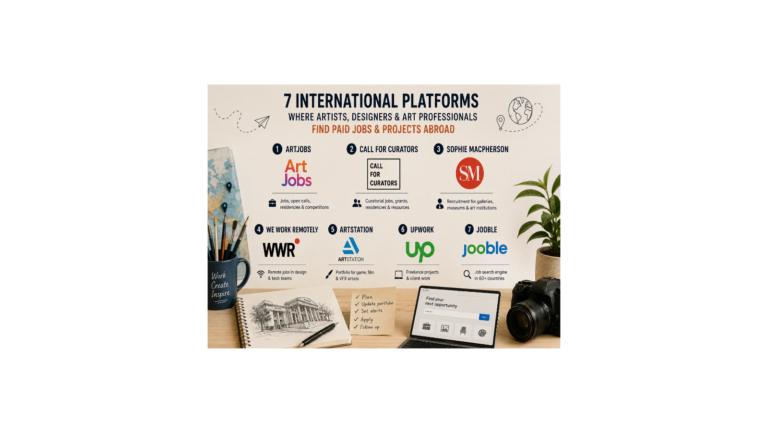
It’s important to understand: this is not a portfolio showcase like ArtStation, nor a shop that sells paintings, but a services marketplace — you take on orders and do them for the client. Illustrators and designers have their own sections (Design & Creative): illustration, branding, UI/UX, motion, 2D/3D graphics for games.
How to start
A basic account is free. You need to fill in your profile fully: specialisation, description, rate, portfolio, skills — you can even make several profiles for different services (one for illustration, another for UI). Talking to clients and sending proposals is in English, and you need a working level (roughly B1 and up).
Identity verification is required: a passport or ID, proof of address and a short video or photo to match your face to the document (you get 7 days for this). The name on your profile must match your documents and your payout method. Your first payout opens after a few days — a protective delay.
How orders come in
There are three paths. First, bidding on jobs: a client posts a task and you send a proposal. Each proposal costs Connects — the platform’s internal “tokens” (usually 4–20 per proposal, at roughly 15 cents each). If you lose the bid they are not refunded — it’s a fee for trying.
Second, ready-made service packages (Project Catalogue): you list a service with a price and tiers (basic, standard, premium), the client buys it directly, and no tokens are spent. This is handy for an artist: “an avatar in my style”, “a book cover”, “an icon set”.
Third, client invitations and direct contracts with your own client (a lower fee). Payment is protected: the client puts the money in up front and it is held on the platform until you deliver (that’s escrow); hourly work is paid through a time-tracking app.
What Upwork takes
The fee is variable — from 0 to 15% of the contract. The exact percentage is set by an algorithm (it depends on the job and demand in the category); you can’t haggle, but it’s shown in advance and fixed for the whole contract. If the client is refunded, the fee is refunded too.
The cheapest option is a direct contract with your own client: 5%, and on the paid Freelancer Plus subscription (about $20 a month) — 0%.
Withdrawing to a local bank costs less than a dollar per transfer; through PayPal or Payoneer it’s their fee plus currency conversion. A tip: build the fee into your rate up front — if you want to net $20 an hour at a 10% fee, quote 22.
Who the site is available to
Upwork doesn’t operate in every country: you can use the platform and withdraw money only if you are located in a country where it’s available (in the EU, Georgia, Armenia or Kazakhstan, for example). The key point: what matters is your actual, verifiable country of residence, not your citizenship.
When you register you state your real country, pass identity and address verification, and withdraw to a local bank, PayPal or Payoneer. If you’ve relocated and an old account was frozen because of the previous country, you can apply to unfreeze it or register again with a new address — your rating usually carries over.
Important: registering through a VPN with someone else’s address is a direct violation of the rules. At the first check it leads to a ban along with your frozen money, so we don’t advise any workarounds.
How to work more effectively
Your main score as a freelancer is the Job Success Score (JSS): it’s based on completed jobs, including a hidden client review you never see; 90% and up is a strong level, so it’s best to close “stuck” jobs politely. The Rising Talent, Top Rated and Top Rated Plus badges give you free “tokens” for proposals.
What really helps an artist: keep ready-made service packages (Project Catalogue) as a channel that works without proposals; the first two lines of your proposal decide everything — that’s all the client sees in the list; specialise narrowly (“children’s book illustrator, watercolor” grabs attention better than a vague “artist”).
Things to remember: competition is very high — a popular job draws dozens of proposals within an hour, some with lowball prices and AI images. You pay for proposals before you’ve earned anything, and losses aren’t refunded. Money arrives with a delay (up to 10 days for hourly work). And beware of scammers: a real client won’t move you to messengers before a contract, won’t ask for a free “test”, and won’t send suspicious links.