AIR InSILo – paid artist residency near Vienna with up to €2,450, materials and travel costs
In its 2023 call, the AIR InSILo residency near Vienna offered artists €1,000 for five weeks.
Now this paid artist residency offers a fee of up to €2,450 for seven weeks.
It also covers materials and travel, and it gives you a room and workshops free of charge.
The call sets no limits on country or age.
For the first stage, a portfolio and a three-sentence letter are enough.
Who runs the residency
AIR InSILo is an artist-run initiative led by the artists and curators Ksenia Yurkova and Martin Breindl.
Their non-profit association has hosted residents since 2021.
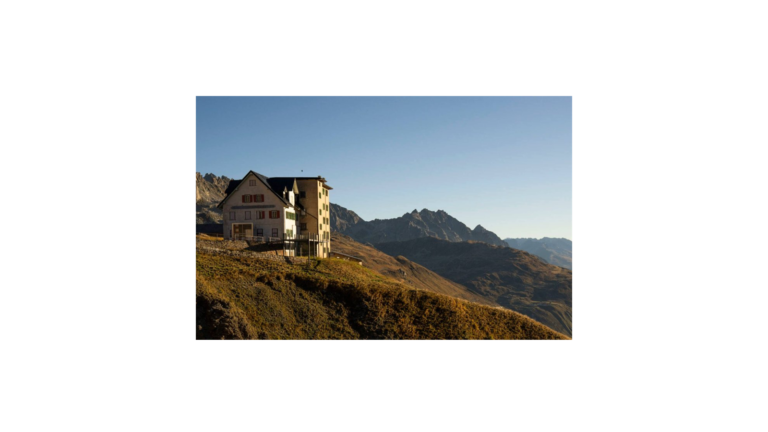
The house stands in the small town of Hollabrunn in Lower Austria, 50 km north of Vienna.
Around it lies the Weinviertel, Austria’s largest wine-growing region.
The train station is a five-minute walk away, and the centre of Vienna is about 45 minutes away.
The residency calls itself a solidarity project, so it expects you to take part in shared life in the house and to care for others.
What the 2027 call is about
Each call has its own theme, and this one comes from the invited curator Ahmad Darkhabani.
The call’s title is “when the hourless seeps”, and it deals with the fragility of reality and life.
For example, the curator invites you to explore death and the anxiety around it, decay and the vulnerability of the body.
The theme also covers time as an instrument of exploitation, biopolitics and the crisis of the vanishing self.
Any medium is welcome, but the organisers value a clear link between your choice of material and your idea.
In addition, the call looks for practices that political and social circumstances have denied time and resources.
How much the residency pays
The residency is fully funded, and the money comes in separate budgets.
The fee is up to €2,450 for seven weeks, calculated for each working day.
There are two slots: April–May and June–July 2027.
You also get up to €400 for materials, up to €400 for travel and up to €175 for regional transport.
The residency pays back travel and transport against original tickets and receipts, so keep them.
Beyond the money, you have five sessions with the invited curator and two with the residency curators.
Finally, the package includes a feature in the residency’s InSILo Magazine.
Where you will live and work
The house hosts up to three artists, and each of you has a private room with a workspace.
You share the kitchen, bathroom, workshops and bicycles with the other residents.
The barn has wood and metal workshops with tools, and the basement holds more workshops.
You can borrow equipment from the residency’s list, and you can pay for rentals from your materials budget.
However, tools bought with this money stay at the residency.
A partner or a child aged three or over can share your room if you arrange this when you apply.
That said, the house is not equipped for wheelchair access.
If you need a longer stay
If you are in a difficult life situation, the Hardship programme gives you more time.
The conditions are the same, but the stay lasts three months, from June to August 2027.
The honorarium stays the same, and these applicants may be exempt from the €7 solidarity fee.
For this programme, you add a cover letter and documents about your situation.
You can apply for the regular residency and for Hardship at the same time.
Who it suits
There is no age limit, but the call mainly looks for late-emerging and early mid-career artists.
This applies especially around the age of 35, when, in the organisers’ words, institutional support is already fading.
The residency gives special attention to working mothers and underrepresented artists.
It also welcomes artists from countries with little or no support for culture, and LGBTIQA+ artists.
However, students on bachelor’s or master’s programmes cannot apply, but PhD candidates can.
If you are studying now, see our list of artist residencies.
What to know before you apply
The main condition is being there: you must spend at least 80% of the residency on site.
You can leave only in exceptional cases agreed in advance, and the fee is paused for that time.
You need your own medical insurance.
The residency provides visa support documents, but you apply for the visa yourself, in good time.
The working language is English, and the team also speaks German and Russian informally.
You can apply as a duo, but the fee does not double, and a second room depends on available space.
At the end, you hand in a work in progress, and the residency records a video interview with you for its magazine.
How the selection works
Selection has two stages, and at the first one you can stay anonymous.
The idea comes from blind auditions in music, where the jury cannot see the performer.
The list for the second stage is due on 9 January 2027, and invited artists then have three weeks.
On 14 January at 19:00 CET, the residency plans an online Q&A session.
The shortlist is due by 14 February, and Zoom interviews are planned for 15 to 20 February.
The final selection is due by 28 February 2027, and if you get no email, your project was not selected.
How to apply
For the first stage, you fill in a short form on the call page.
It has four required fields: email, motivation letter, portfolio link and a question about your studies.
The letter has three sentences at most: how your practice relates to the theme and why you need the residency.
Before writing it, read the curatorial text and watch the video with the curator.
Your portfolio should be a PDF in cloud storage, and you can anonymise both your email and portfolio.
The organisers ask you not to use AI tools to write the letter.
What you need for the second stage
If you are invited, you send a single PDF of up to 10 MB describing your project in detail.
Among other things, it includes an abstract, a text of 3,000 to 6,000 characters, a work plan, the expected outcome and a budget.
You also need a bio of up to 1,000 characters, a black-and-white portrait and a CV of up to four pages.
We explain how to prepare these documents in our guide to artist statements, CVs and portfolios.
Before the second form, you pay a solidarity fee of €7, which goes entirely to the Hardship programme.
You can ask for a fee waiver by email on 19 January only, and the number of waivers is limited.
At this stage, the residency rejects applications written entirely by AI.